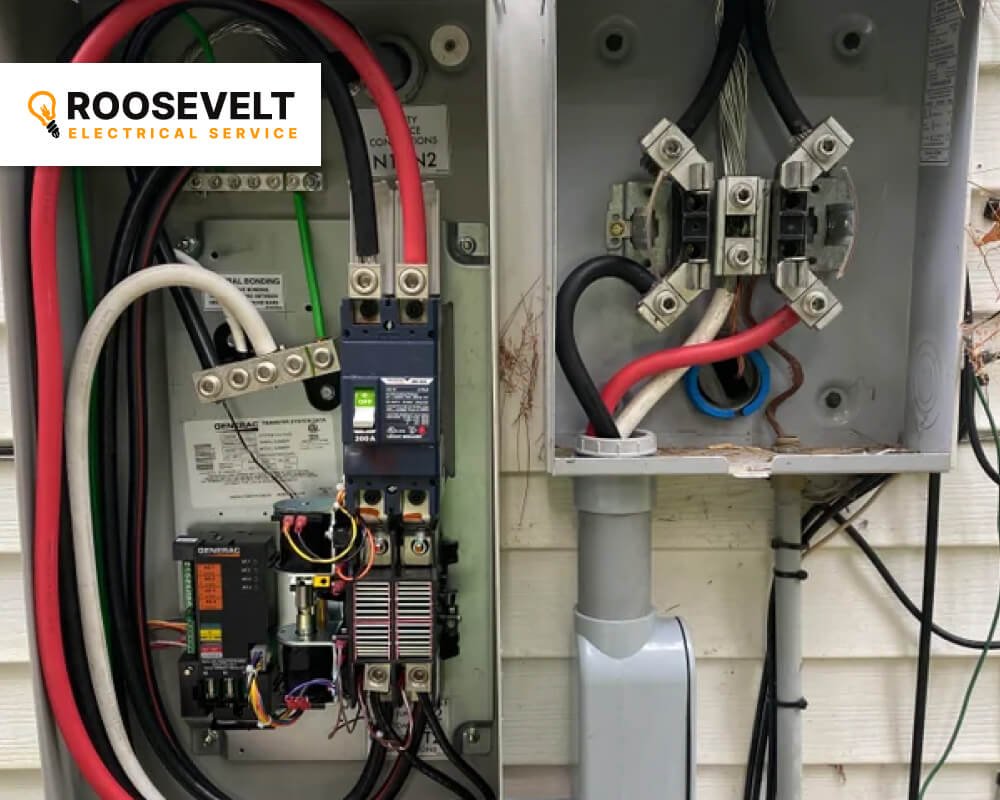
When the lights go out, a silent panic can easily set in. But for homeowners prepared with a generator, that panic is replaced by a quick, safe transition to emergency power – thanks to a crucial device: the transfer switch. Mastering Transfer Switch Installation & Electrical Codes isn't just about convenience; it's about safeguarding your home, your appliances, and most importantly, preventing catastrophic electrical hazards.
Installing a transfer switch is the bridge between your generator and your home's electrical system, designed to make sure utility power and generator power never meet. This guide cuts through the complexity, giving you the authoritative insights you need to understand this vital process, what the electrical codes demand, and why getting it right is non-negotiable.
At a Glance: Transfer Switch Essentials
- A transfer switch is a critical safety device that isolates your generator from the utility grid.
- It prevents "backfeeding," which can electrocute utility workers and damage your home's electrical system.
- Proper sizing ensures your generator can power essential circuits without overload.
- Installation involves careful planning, precise wiring, and adherence to specific electrical codes.
- This is a highly technical task that should always be performed by a qualified, licensed electrician or authorized service dealer.
- Permits are almost always required before installation.
Why a Transfer Switch is Non-Negotiable for Generator Safety
Think of your home's electrical system as a two-way street. Utility power flows in from one direction, powering everything. Your generator provides power from another direction. Without a transfer switch, these two power sources could collide – a dangerous situation known as "backfeeding."
Backfeeding sends electricity generated by your portable or standby unit back into the main utility lines. This isn't just a hypothetical risk; it's a very real threat to utility workers who might be trying to restore power, potentially leading to severe injury or even death. For your home, it can damage sensitive electronics, overload circuits, and create fire hazards.
A transfer switch acts as a secure gatekeeper. It ensures that your home is connected to only one power source at a time – either the utility grid or your generator. It literally "transfers" the electrical load from one source to the other, making it impossible for both to be active simultaneously. This elegant solution is why understanding Transfer Switch Installation & Electrical Codes is paramount.
Decoding the Codes: What Every Homeowner Needs to Know
Navigating electrical codes can feel like deciphering an ancient language, but for transfer switch installation, it's absolutely essential. These aren't just suggestions; they are legal requirements designed for safety.
The primary authority is the National Electrical Code (NEC), published by the National Fire Protection Association (NFPA). Most local and state jurisdictions adopt the NEC, sometimes with specific amendments. The NEC outlines everything from wire gauges and conduit types to grounding requirements and disconnect methods.
Here's what you need to understand about the codes:
- Permit Requirements: Before any electrical work, especially one as significant as installing a transfer switch, you will almost certainly need a permit from your local building department. This isn't bureaucracy for bureaucracy's sake; it ensures that a qualified inspector reviews the plans and the final installation to confirm it meets safety standards. Skipping this step can lead to fines, difficulties with insurance, or even being forced to remove the installation.
- Professional Installation Mandate: While the NEC doesn't explicitly say "only a licensed electrician," the complexity and inherent dangers of working with high-voltage electricity strongly imply it. The ground truth states, "This task requires experience with electrical wiring and should be performed by a Generac Independent Authorized Service Dealer." This isn't just a recommendation; it's a safety imperative. A licensed electrician or authorized technician is well-versed in the latest NEC revisions and local amendments, ensuring your installation is compliant and safe. They also carry the necessary insurance and can secure the required permits.
- Proper Sizing and Protection: Codes dictate the correct sizing of wires, breakers, and the transfer switch itself to match your generator and home's electrical load. Overcurrent protection (breakers) must be correctly rated to prevent damage from surges or faults.
- Grounding and Bonding: Proper grounding and bonding are critical for safety, providing a path for fault currents to safely dissipate, protecting against shock hazards. The NEC has specific, detailed requirements for these systems.
- Location and Clearance: There are rules about where a transfer switch can be mounted, considering factors like accessibility, working clearances, and proximity to other electrical components or flammable materials.
- Labeling: Clear, durable labels indicating the purpose of circuits and disconnects are required, ensuring anyone working on the system in the future can do so safely.
Attempting to bypass these codes or perform the installation yourself without proper qualifications is not only illegal in most places but extremely dangerous. Your primary takeaway regarding Transfer Switch Installation & Electrical Codes should be this: always consult with and hire a licensed professional. They are your best defense against errors and hazards. If you're wondering about the specifics of residential electrical codes, understanding key residential NEC requirements you need to know can be incredibly helpful when discussing your project with an electrician.
The Right Match: Sizing Your Transfer Switch and Generator
Before anyone even thinks about wiring, the first, most critical step is ensuring you have the right equipment. This involves a careful assessment of your power needs and matching it to your generator and transfer switch.
Your transfer switch's size must perfectly align with the power requirements of the subpanel it's connecting to, and crucially, the assigned breaker sizes must be equal in both the transfer switch and your home's main load center. This isn't guesswork; it's an engineering exercise.
Strategic Planning for Reliable Power
- Identify Your Essentials: Start by listing every appliance and circuit you consider absolutely critical during an outage. This might include:
- Refrigerator/Freezer
- Well pump
- Furnace/AC (blower motor, controls)
- A few key lights
- Medical equipment
- Garage door opener
- Water heater (if electric and essential)
- A circuit for charging phones/laptops
- Calculate Power Demand: For each essential device, find its wattage (W) or amperage (A) on its nameplate or owner's manual. Remember that motor-driven appliances (refrigerators, pumps, HVAC units) have a much higher "starting" or "surge" wattage than their continuous running wattage. You'll need to account for this.
- Example: A refrigerator might run at 600W but surge to 1800W when the compressor kicks on.
- For a deeper dive into making these calculations, refer to how to properly size your home generator.
- Confirm Generator Capacity: Sum the total power demand, paying close attention to simultaneous operation. You're unlikely to have your well pump, furnace, and microwave all kick on at the exact same moment. Plan for the most likely peak load your generator will handle. Your generator must have enough wattage capacity to handle this combined amperage, including those momentary surge loads. Overloading your generator will trip its breaker, or worse, damage it.
- Circuit Assignment and Labeling: Once you've identified your essential circuits, assign a number or clear label to each, corresponding to its specific breaker in your main electrical panel. You'll replicate this labeling system in the transfer switch's circuit breakers. This meticulous organization ensures that during installation, and later during an outage, you know exactly what each switch controls.
This planning phase is where you make critical decisions that affect the entire system's functionality and safety. It's also where you decide if a manual transfer switch, which requires you to flip breakers, or an automatic transfer switch, which handles the transition seamlessly, is right for you. Exploring the differences between automatic and manual transfer switches can help inform this choice.
The Installation Journey: A Step-by-Step Overview
The following steps outline the typical process for a manual transfer switch installation. While detailed, remember this is a highly skilled operation that demands electrical expertise and strict adherence to Transfer Switch Installation & Electrical Codes. Do not attempt this without proper qualifications.
Phase 1: Power Down & Prepare
Safety is paramount. The very first action is to completely de-energize your home's main electrical panel.
- Cut the Main Power Supply: Locate your home's main circuit breaker (often a large, clearly labeled breaker at the top of your main service panel) and switch it OFF. This cuts all power from the utility to your home. Always verify with a non-contact voltage tester that power is indeed off before proceeding.
- Remove Covers: Carefully remove the front cover from both your main circuit breaker panel and the transfer switch unit. This exposes the wiring terminals and internal components.
Phase 2: Mounting the Transfer Switch
Strategic placement is key for both safety and convenience.
- Prepare the Unit: If your transfer switch comes with an insulating tube for the wiring harness, trim it to a workable length using a utility knife. This tube protects the wires as they run between the transfer switch and your main panel.
- Attach Connectors: Securely attach any necessary electrical connectors to the wires, using PVC cement if specified by the manufacturer, to ensure a tight, weather-resistant seal.
- Mount the Transfer Switch: Choose a mounting location for the transfer switch, typically within 1 ½ feet (approximately 45 cm) of the midpoint of your main circuit breaker panel. This proximity minimizes cable runs and ensures a neat installation. Secure the transfer switch firmly to the wall using appropriate mounting screws, ensuring it's level and stable.
Phase 3: Precision Wiring the Transfer Switch
This is the core of the installation, where the transfer switch connects to both your generator and your home's essential circuits.
- Run the Wiring Harness: Route the transfer switch's wiring harness – the bundle of wires that connects to your main panel – through one of the designated knockouts on the underside of the transfer switch. The other end of this bundle will enter your main circuit breaker panel through a bottom knockout.
- Pull and Trim Wires: Pull the wire bundle through the insulating tube, then carefully trim approximately 5/8 inch (1.59 cm) of insulation from the end of each individual wire. This exposes enough bare wire for a secure connection without exposing too much, which could lead to shorts.
- Connect to Transfer Switch Breakers: Referencing your planning notes and labels, connect each trimmed wire from the harness to its corresponding breaker in the transfer switch. These are the circuits you identified as essential. Ensure each wire is securely fastened to its terminal.
- Utility Connections: Attach the miscellaneous black wires (typically two) to the Utility 2-pole breaker within the transfer switch. This breaker acts as the main disconnect for the utility side.
- Neutral Connection: Connect the white (neutral) wire from the harness to the designated neutral bar or area in the middle of the transfer switch.
- Grounding Connection: Connect the green (ground) wire to the grounding bar, usually located on the left side of the lower portion of the transfer switch. If the transfer switch unit doesn't have a separate ground bar, the neutral bar might be bonded and serve this purpose, but always follow manufacturer instructions and local codes.
- Replace Cover: Once all connections are made and double-checked for tightness and correctness, carefully replace the transfer switch cover.
Phase 4: Reconfiguring Your Main Load Center
This step redirects your essential circuits from your main panel to the newly installed transfer switch.
- Confirm Power Off: Absolutely re-confirm that the main power supply to your home's load center is still cut off. Safety first, always.
- Detach Appliance Wires: Inside your main circuit breaker box, detach the individual wires corresponding to the essential appliances (the ones you labeled during planning) from their respective breakers.
- Prepare Wires for Transfer Switch: Trim approximately 5/8 inch (1.59 cm) of insulation from these detached wires.
- Connect to Transfer Switch Wires: Using appropriate wire connectors (e.g., wire nuts), join these detached appliance wires to the corresponding wires coming from the transfer switch wiring harness. This is where your meticulous labeling pays off, ensuring the right appliance connects to the right transfer switch circuit.
- New 2-Pole Breaker: Join any miscellaneous black wires (related to the utility feed for the transfer switch) to a new 2-pole breaker that you will install in your main panel. This breaker will power the transfer switch itself from the utility side.
- Remove Old Breakers: Detach the individual pole breakers from your main panel from where each assigned appliance wire was removed. These circuits are now being handled by the transfer switch.
Phase 5: Final Checks & Power Up
The final steps involve buttoning everything up and, critically, testing the system safely.
- Replace Main Panel Cover: Once all connections are made in the main load center and verified, carefully replace the main circuit breaker panel cover. Ensure all screws are tightened.
- Restore Power Supply: With both covers securely in place, you can now restore the main power supply to your home by switching your main circuit breaker back to the ON position.
- Test the System: Follow your transfer switch and generator manufacturer's instructions for the initial test. This typically involves:
- Starting your generator.
- Switching the transfer switch from "Utility" to "Generator" power.
- Verifying that your selected essential circuits now have power from the generator.
- Switching back to "Utility" power and shutting down the generator.
This testing phase is crucial to ensure everything functions as intended and safely. Any issues identified during testing must be addressed by a qualified professional before relying on the system. Don't forget that regular maintenance is also critical for your generator's reliability. For tips on keeping your system running smoothly, check out essential generator maintenance tips.
Common Pitfalls and How to Avoid Them
Even with the best intentions, errors can happen. Here are common mistakes in Transfer Switch Installation & Electrical Codes compliance and how to steer clear of them:
- Underestimating Generator/Switch Size: Trying to power too many appliances with an undersized generator or transfer switch will lead to frequent breaker trips, potential damage to the generator, or simply not enough power when you need it most. Avoid this by performing a thorough load calculation (as outlined in the planning phase) and consulting a professional.
- Ignoring Local Codes and Permits: This is perhaps the biggest pitfall. Installing a transfer switch without a permit or not adhering to local electrical codes can result in fines, the need for costly rework, insurance claim denials, and, most importantly, unsafe conditions. Always obtain the necessary permits and hire a licensed professional who understands local ordinances.
- Incorrect Wiring and Connections: Loose connections, miswired circuits, or improper grounding can lead to arc faults, short circuits, electrocution hazards, and fire. This is not a DIY project. Rely on a licensed electrician or authorized service dealer for all wiring.
- Improper Grounding and Bonding: Faulty grounding can be lethal. The NEC has very specific requirements for grounding electrodes, bonding, and grounding conductor sizing. Ensure these are strictly followed by your installer.
- Neglecting Clearances: Electrical panels and equipment require specific clear working spaces around them for safety and maintenance. Obstructing these can violate codes and create hazards. Ensure proper clearances are maintained around both the main panel and the transfer switch.
- Failing to Test: After installation, a full functional test is absolutely necessary to confirm everything works as expected under generator power. Don't skip this step; it's the final verification of a safe and operational system.
When to Call in the Pros
Throughout this guide, the emphasis on professional installation has been consistent, and for good reason. When it comes to Transfer Switch Installation & Electrical Codes, the "should" quickly becomes "must."
Working with your home's electrical system, particularly at the service entrance and main panel, involves live wires carrying lethal voltage. Even when the main breaker is off, adjacent circuits or misidentified panels can pose a severe risk.
A qualified, licensed electrician or a Generac Independent Authorized Service Dealer brings:
- Expertise in Electrical Codes: They stay current with the latest NEC revisions and local amendments, ensuring your installation is fully compliant.
- Safety Protocols: Professionals know how to work safely with electricity, using proper lockout/tagout procedures and personal protective equipment.
- Proper Tools and Equipment: They have specialized tools for testing, wiring, and ensuring secure connections.
- Experience: They've performed these installations countless times, anticipating potential issues and executing the work efficiently and correctly.
- Permit Handling: They can guide you through the permit application process or handle it entirely, ensuring all inspections are scheduled and passed.
- Warranty Protection: Many generator and transfer switch manufacturers require professional installation to maintain product warranties.
While the desire to save money on a DIY project is understandable, the potential costs of an incorrect transfer switch installation – fines, fire damage, injury, or even loss of life – far outweigh any perceived savings. This is one area where investing in professional expertise is not just smart, it's critical. If you're considering a portable generator, understanding the transfer switch options for them is also key, and Your guide to portable generator transfer switches can provide valuable context.
Your Questions Answered
We often hear similar questions from homeowners embarking on their generator journey. Here are some quick, clear answers:
Q: Can I use an extension cord instead of a transfer switch?
A: Absolutely not. Plugging a generator directly into your home's outlets via an extension cord (known as backfeeding) is extremely dangerous and illegal. It bypasses all safety mechanisms and can electrocute utility workers or damage your home's electrical system. A transfer switch is the only safe and legal way to connect a generator to your home.
Q: How long does a transfer switch installation typically take?
A: For a licensed professional, a standard manual transfer switch installation can typically be completed in 4 to 8 hours, depending on the complexity of your electrical panel and the number of circuits being connected. This doesn't include the planning, permit acquisition, or inspection time.
Q: Do I need a specific type of transfer switch for a portable vs. standby generator?
A: Yes. While both prevent backfeeding, their designs differ. Portable generators typically use a manual transfer switch or an interlock kit. Standby generators almost exclusively use automatic transfer switches, which detect power outages and start the generator automatically.
Q: What is the average cost of transfer switch installation?
A: The cost varies significantly based on geographic location, the type of transfer switch (manual vs. automatic), the number of circuits, and local labor rates. Generally, you can expect to pay anywhere from $800 to $2,500 for a manual transfer switch installation, and $2,500 to $5,000+ for an automatic system, including the switch itself and labor. Always get multiple quotes from licensed professionals.
Q: Will installing a transfer switch affect my home's warranty or insurance?
A: A properly installed, code-compliant transfer switch should not negatively affect your home's warranty or insurance. In fact, it's often viewed as a safety enhancement. However, an improperly installed or unpermitted system could certainly void warranties or lead to issues with insurance claims if it causes damage or an incident. This is another reason to trust professionals.
Taking the Next Step Towards Secure Power
Understanding Transfer Switch Installation & Electrical Codes isn't just about reading; it's about empowering yourself to make informed decisions for your home's safety and reliability. A generator paired with a properly installed, code-compliant transfer switch is a formidable defense against power outages, offering peace of mind when the grid fails.
Your next step should be to connect with a qualified, licensed electrician or an authorized generator service dealer in your area. They can assess your specific needs, help you navigate local codes, obtain necessary permits, and perform a safe, reliable installation. Don't leave your family's safety and your home's integrity to chance. Invest in professional expertise for a power solution that works seamlessly and securely, giving you control when it matters most.